Growth Navigate Funding: Using KPIs and Cash Flow Data to Attract Investors
Nine out of ten startups run out of money. Not because their idea was bad. Not because the founders were lazy. They ran out of cash.
That hurts. You build something amazing. People love it. But the money runs dry. Bills pile up. Stress grows. Investors say, “Come back when you have more traction.”
Here’s the truth. Investors don’t just fund ideas. They fund numbers. If you want to master growth navigate funding, you must show clear KPIs and strong cash flow data. Numbers tell a story. A good story gets funded.
Let’s break this down in a simple way.
What “Growth Navigate Funding” Really Means
Growth navigate funding is about matching your money strategy with your business stage. Think of your business like a video game character. At Level 1, you don’t fight the final boss. You train first. You build skills. You collect tools.
It’s the same with funding. At the start, your goal is not to raise millions. Your goal is to prove your idea works. Later, you raise money to grow faster. Each stage needs different proof.
Why does this matter? Because many founders raise money too early. Or they raise too much. Then they waste it. Smart founders build structure first. They organize numbers. They track results. They show investors they are ready. That’s growth navigation. You grow in the right order.
Why Investors Care More About KPIs Than Your Idea
A KPI is a Key Performance Indicator. That means a number that shows how well your business is doing. It’s like a score in a game.
Your idea might sound cool. But investors ask, “How do we know this works?” KPIs answer that question. They show real proof. For example, how many users sign up each month? How much does each customer pay? How many stay?
Investors love KPIs because numbers reduce risk. Risk means the chance of losing money. The lower the risk, the safer the investment feels. When you show strong KPIs, you calm investor fears. You say, “Look. This is not just hope. This is data.”
The deeper reason? Investors compare you with other startups. They see hundreds of pitches. KPIs help them rank you. If your numbers grow every month, you stand out. Growth is like fuel. Investors want rockets, not bicycles.
The Most Important KPIs for Early-Stage Startups
Not all KPIs matter at every stage. If you track 50 numbers, you get confused. Focus on the few that show real growth.
For early startups, investors usually care about customer growth. Are more people joining each month? They also look at retention. That means how many customers stay instead of leaving. If people leave quickly, that’s a red flag.
Revenue is another key KPI. Revenue means the money you earn. Even small revenue is powerful. It proves someone is willing to pay. Investors also check Customer Acquisition Cost (CAC). That is how much money you spend to get one customer. If it costs $100 to get a customer who pays $20, that’s a problem.
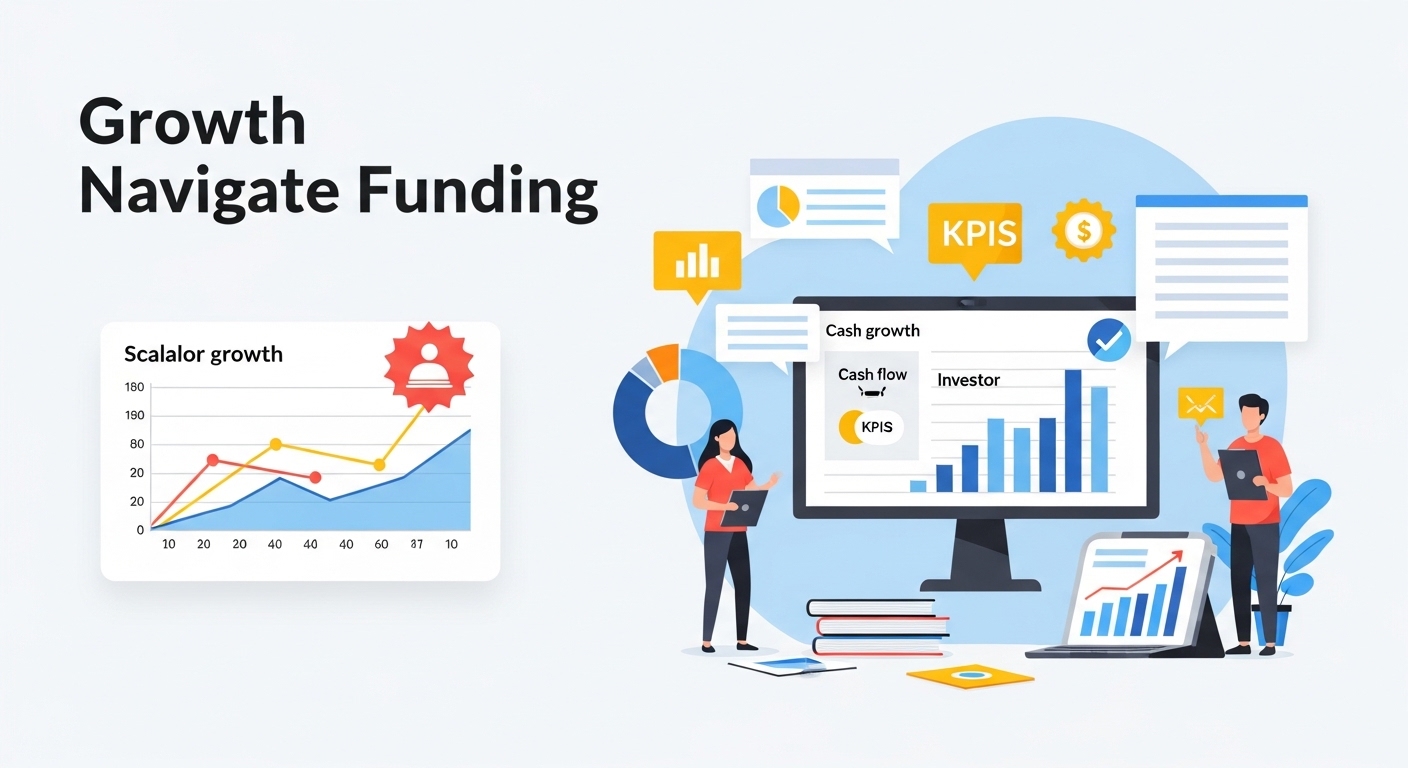
Here’s the hidden tip many blogs skip: show trend lines, not just totals. A trend line shows growth over time. Investors care more about direction than size. A small but fast-growing startup can win over a big but slow one.
Cash Flow: The Lifeline of Your Business
Cash flow means money coming in and money going out. It sounds simple. But it decides if you live or die as a startup.
You can show big revenue and still go bankrupt. Why? Because cash timing matters. If customers pay late but bills are due now, you run out of cash. That’s called a cash crunch.
Investors study cash flow because it shows discipline. Discipline means control and careful planning. If you manage cash well, you show maturity. You prove you can handle bigger funding rounds later.
Smart founders forecast cash flow. Forecast means predicting the future based on data. They know how many months of runway they have. Runway means how long you can survive before money runs out. Investors always ask, “How much runway do you have?” Be ready to answer clearly.
How to Build Financial Visibility Before Raising Money
Financial visibility means clear and organized financial records. No messy spreadsheets. No guessing.
Start with monthly tracking. Know exactly how much you earn and spend. Separate fixed costs and variable costs. Fixed costs stay the same each month, like rent. Variable costs change, like ads.
Then track your burn rate. Burn rate is how fast you spend money. If you spend $20,000 per month, that’s your burn. Divide your cash in bank by burn rate. That gives you runway months.
Here’s how to build visibility step by step:
- Track monthly revenue
- Track monthly expenses
- Calculate burn rate
- Calculate runway
- Review KPIs every 30 days
This simple habit makes you investor-ready faster than a fancy pitch deck.
Using Data to Prove Product-Market Fit
Product-market fit means people truly want your product. They don’t just try it. They use it again and again.
Investors look for signs of strong fit. High retention is one sign. Repeat purchases are another. Positive reviews also help. But data is stronger than opinions.
Show churn rate. Churn means how many customers leave each month. Lower churn is better. If churn drops over time, it shows improvement. That excites investors.
Another smart move is cohort analysis. A cohort is a group of users who joined at the same time. If newer cohorts perform better than older ones, it shows your product is improving. That’s powerful proof of learning and growth.
Funding Stages and What Investors Expect
At seed stage, investors expect early traction. Traction means proof that people care. This could be users, revenue, or partnerships. They know you are still testing.
At Series A, they expect a working model. You must show that for every dollar spent, you can earn more back. Clear KPIs matter here. Efficiency becomes important.
By Series B and beyond, growth speed is key. Investors want scale. Scale means growing bigger without costs rising too fast. That’s where systems and technology matter. If your operations break under pressure, investors walk away.
Growth navigate funding means knowing these expectations before you raise money. You prepare the right proof for the right stage.
Choosing the Right Funding Model
Not all money is equal. Some funding takes ownership. Some requires repayment.
Here’s a simple comparison:
| Funding Type | Pros | Cons |
|---|---|---|
| Equity (VC/Angels) | Large capital, expert advice | You give up ownership |
| Debt | Keep ownership | Must repay with interest |
| Grants | Free money | Hard to qualify |
| Revenue-Based Financing | Flexible payments | Can reduce cash flow |
Equity works best for high-growth startups. Debt works if you have stable revenue. Revenue-based financing helps businesses with ups and downs.
The key is alignment. If you want fast scaling, equity may help. If you value control, consider other options. Smart founders think long-term before choosing.
Building a Data-Driven Pitch Deck
A pitch deck is a short slide presentation for investors. Most good decks have 12 to 14 slides. Keep it simple.
Each slide must support your growth story. Show KPIs clearly. Use graphs. Show month-by-month growth. Explain your cash flow logic.
Avoid guessing. Don’t say, “We think we will grow 10x.” Show why. If you increase marketing spend, explain how that affects revenue. Investors test logic fast.
The secret most people ignore? Practice explaining your numbers out loud. If you can’t explain a KPI in one clear sentence, you don’t understand it well enough.
Avoiding Common Growth Traps
Rapid growth feels exciting. But it creates stress. Hiring too fast increases burn rate. Expanding too quickly creates chaos.
One common mistake is ignoring systems. If your processes are not documented, mistakes multiply. Document means write down how things work. Clear systems allow scaling without panic.
Another trap is chasing vanity metrics. Vanity metrics look impressive but don’t drive profit. For example, social media followers don’t matter if they don’t buy.
Stay focused on core KPIs tied to revenue and retention. That keeps your growth real, not fake.
Turning KPIs Into Investor Confidence
Numbers alone are not enough. You must connect them to a story.
If customer acquisition cost drops each month, explain why. Maybe your brand is stronger. Maybe referrals are increasing. Investors love improving efficiency.
If revenue grows steadily, show the engine behind it. Is it marketing? Partnerships? Product upgrades? Confidence grows when investors understand the cause of growth, not just the result.
Consistency builds trust. When KPIs improve quarter after quarter, investors relax. They see control. They see leadership. That’s when funding conversations become easier.
The Final Word: What You Should Do Next
Close this tab and check your numbers.
Do you know your monthly burn rate?
Do you know your runway?
Do you track retention?
Can you explain your top three KPIs in one sentence each?
If not, start today.
Open a spreadsheet. Organize revenue and expenses. Calculate burn rate. Track monthly growth. Review your KPIs every 30 days. Improve one metric at a time.
When your numbers tell a clear story, investors listen. When your cash flow shows discipline, investors trust. That is the heart of growth navigate funding.
Build structure first. Prove growth with data. Then raise money with confidence.
Keep up with Playithic for the latest news and trends!