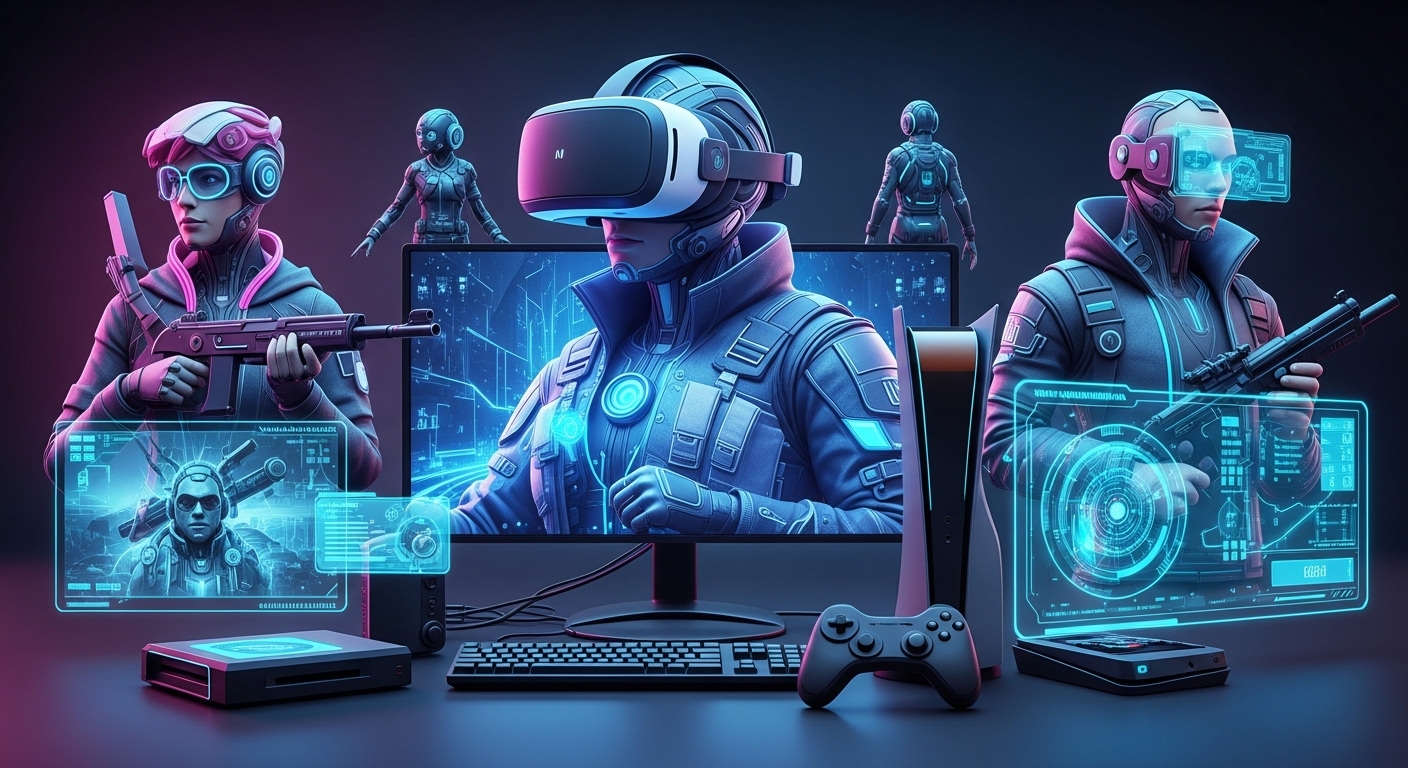
Blog Gaming DualMedia: The Role of Artificial Intelligence in Modern Game Development
Artificial Intelligence (AI) is no longer a futuristic concept; it has become an essential part of modern game development. At Blog Gaming DualMedia, we explore how AI is reshaping every aspect of gaming, from creating smarter in-game characters to enhancing graphics, improving player experiences, and even assisting developers in designing complex game worlds. This article dives deep into AI’s role in the gaming industry, making it easy to understand for everyone, even young gamers and aspiring developers.
What Is Artificial Intelligence in Gaming?
Artificial Intelligence in gaming refers to the use of computer algorithms and systems that allow game characters, environments, and mechanics to adapt, respond, and make decisions autonomously. Unlike traditional game programming, where every action must be pre-coded, AI allows games to feel more dynamic and realistic. It helps create intelligent non-player characters (NPCs), adaptive challenges, and immersive worlds that respond to player actions in innovative ways.
AI in games can be broadly categorized into several types: reactive AI, which responds to player actions without memory of past events; limited memory AI, which remembers recent actions to make better decisions; and advanced AI, including machine learning systems that can adapt and evolve over time.
How AI Transforms Game Characters
One of the most noticeable effects of AI in modern games is the intelligence of NPCs. In older games, NPCs followed pre-defined patterns and were predictable. Today, thanks to AI, NPCs can:
- React dynamically to player choices
- Form strategies during combat or challenges
- Display emotions and dialogue that feel natural
- Learn from player behavior to provide increasingly difficult or balanced challenges
For example, stealth games use AI to detect player movements in realistic ways, while role-playing games rely on AI to make NPCs behave as if they have their own personalities and daily routines. This creates a more immersive experience where players feel they are interacting with real, living worlds.
AI in Game Design and Development
AI isn’t just about smarter characters; it’s a powerful tool for developers too. Modern game engines integrate AI to assist in designing levels, optimizing performance, and even testing games. Here’s how developers benefit from AI:
- Procedural Generation: AI can create vast game worlds automatically, reducing manual design time and increasing variety.
- Automated Testing: AI bots can simulate player actions to detect bugs, glitches, and balance issues.
- Adaptive Difficulty: AI algorithms can adjust the game’s difficulty based on a player’s skill level to maintain engagement.
- Graphics Enhancement: AI-driven techniques improve textures, lighting, and animations to create stunning visuals without massive resource use.
With these tools, developers can focus more on creative storytelling while AI handles complex calculations and repetitive tasks.
AI in Gameplay Mechanics
AI is also revolutionizing core gameplay mechanics, making games more interactive and engaging. Here are some areas where AI is making a difference:
- Pathfinding: AI algorithms allow characters to navigate complex environments realistically.
- Combat Systems: AI controls enemy tactics and team strategies to challenge players effectively.
- Predictive Behavior: AI anticipates player actions to create responsive and fluid gameplay.
- Environmental Interaction: AI manages how in-game objects and physics respond to player actions, making worlds feel alive.
These innovations make games more exciting, unpredictable, and enjoyable for players, contributing to the success of modern blockbuster titles.
AI and Player Experience
Player experience is at the heart of game design, and AI is key to enhancing it. By using AI, developers can ensure that games feel responsive, fair, and immersive. AI contributes to personalized gaming experiences by:
- Learning player preferences to suggest missions, quests, or content
- Customizing difficulty and challenges dynamically
- Enabling real-time feedback and in-game assistance
- Enhancing social and multiplayer experiences through smart matchmaking and adaptive AI companions
For example, some open-world games now use AI to make cities feel alive, with NPCs reacting realistically to player actions, weather changes, and events in the game world.
The Role of AI in Multiplayer and Online Games
Multiplayer and online games are benefiting enormously from AI. It helps maintain fair gameplay, balance teams, and manage large player communities. AI can:
- Monitor player behavior to prevent cheating and toxic interactions
- Adjust enemy AI in real-time for co-op or competitive play
- Optimize server performance and matchmaking to reduce lag and downtime
- Predict trends in player engagement to inform future updates
AI-driven systems make online games more fun, safer, and more competitive, keeping players engaged for longer periods.
AI and Emerging Technologies in Gaming
Beyond traditional gaming, AI is driving innovations in new technologies such as cloud gaming, virtual reality (VR), and augmented reality (AR). With AI integration, these technologies provide more realistic interactions, faster graphics processing, and smarter in-game environments. For example:
- AI algorithms compress and optimize data for smoother cloud gaming experiences
- VR games use AI to simulate natural player movements and interactions
- AR games leverage AI for object recognition and dynamic content placement in real-world environments
These technologies, combined with AI, are pushing the boundaries of what games can offer, making gaming more immersive and accessible.
Ethical Considerations and Challenges
While AI offers incredible opportunities, it also raises ethical questions in game development. Developers and players must consider:
- Data privacy, especially in AI-driven personalization
- Fairness in AI algorithms to prevent biased gameplay
- Dependence on AI reducing creative input from human designers
- Balancing automation with human oversight to maintain quality and authenticity
Blog Gaming DualMedia emphasizes that responsible AI implementation is essential for maintaining trust and ensuring enjoyable gaming experiences for everyone.
The Future of AI in Gaming
The future of AI in gaming is promising. With advancements in machine learning, natural language processing, and procedural generation, games will continue to become more immersive, intelligent, and interactive. We can expect:
- Smarter NPCs capable of meaningful conversation and autonomous decision-making
- AI-assisted game design producing more expansive and dynamic worlds
- Real-time personalization and adaptive gameplay for every individual player
- Integration with emerging hardware and cloud platforms for seamless experiences
As AI evolves, it will continue to bridge the gap between developer creativity and player expectations, making gaming a richer and more dynamic form of entertainment.
Conclusion
AI is transforming every aspect of modern game development, from smarter characters and adaptive gameplay to advanced graphics and immersive environments. Blog Gaming DualMedia provides insight into these innovations, helping gamers and developers understand the critical role AI plays in shaping the future of the industry. By making games more intelligent, dynamic, and personalized, AI not only enhances the player experience but also empowers developers to create worlds limited only by their imagination. The gaming industry’s evolution is intertwined with AI, and its continued growth promises exciting adventures for both players and creators alike.
Keep up with Playithic for the latest news and trends!